

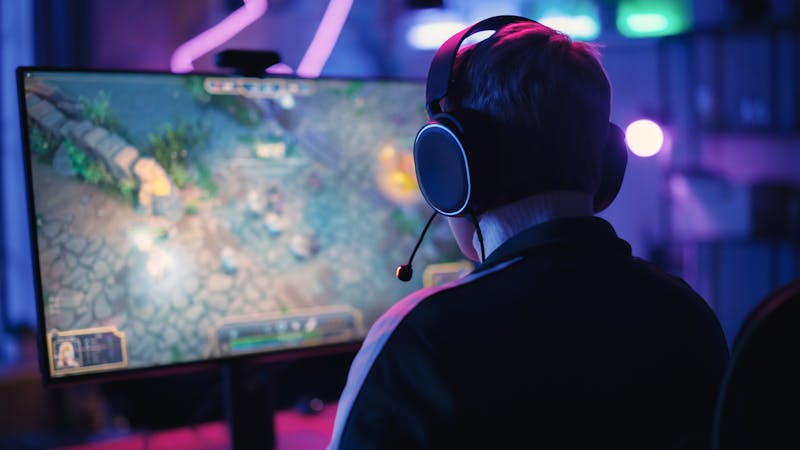
Video games are woven into modern childhood. For many young people, they’re fun, social, and even competitive in positive ways. But for some families, gaming can quietly shift from entertainment to something far more serious.
In our latest YouTube video, attorney Bill Bross shares the powerful story of a young boy whose life changed dramatically after becoming addicted to video games.
From Straight A’s and Sports to Isolation
He was thriving.
A straight-A student.
Active in sports.
Surrounded by friends.
By every measure, he was a well-rounded, high-achieving kid with a bright future.
But as gaming began taking up more of his time, subtle changes appeared. Hours online replaced homework. Practices were skipped. Time with friends dwindled. What once was balance slowly became compulsion.
His grades fell.
His behavior changed.
Friendships faded.
What started as fun turned into something that disrupted nearly every part of his life.
His story is a stark reminder: when gaming becomes excessive, the consequences can extend far beyond the screen.
Is Video Game Addiction Real?
The mental health community has increasingly recognized that problematic gaming can mirror other behavioral addictions.
The American Psychiatric Association includes Internet Gaming Disorder in the DSM-5 as a condition warranting further study, outlining symptoms such as impaired control, preoccupation, withdrawal-like symptoms, and continued use despite negative consequences.
The World Health Organization has gone further, recognizing Gaming Disorder as a diagnosable condition characterized by loss of control over gaming and prioritizing it over daily activities and responsibilities.
While research continues to evolve, the message to families is clear: for some children, excessive gaming is not just a phase — it can be a serious mental and behavioral health issue.
Warning Signs Parents Shouldn’t Ignore
Parents often ask: When does gaming cross the line?
Common red flags include:
- Declining academic performance
- Withdrawal from sports or extracurricular activities
- Irritability or anger when gaming is limited
- Loss of interest in previously enjoyed hobbies
- Social isolation
- Continued gaming despite clear negative consequences
These patterns are not about discipline alone. In some cases, they reflect a deeper cycle of dependency.
The Real-World Impact
Video game addiction can affect:
- Emotional regulation
- Academic success
- Peer relationships
- Family stability
- Mental health
Adolescents are particularly vulnerable. Many modern games are designed to maximize engagement through reward systems, progression mechanics, and social reinforcement. For some children, that design can make disengaging extremely difficult.
This isn’t about blaming technology. It’s about recognizing when use becomes harmful — and understanding the impact on real families.
Watch Bill Bross’s Latest Video
In our newest YouTube release, attorney Bill Bross takes a closer look at this young boy’s story and the broader implications of video game addiction. It’s a powerful example of how quickly things can change — and why awareness matters.
If you’re a parent, educator, or caregiver concerned about excessive gaming, this is an important conversation to have.