

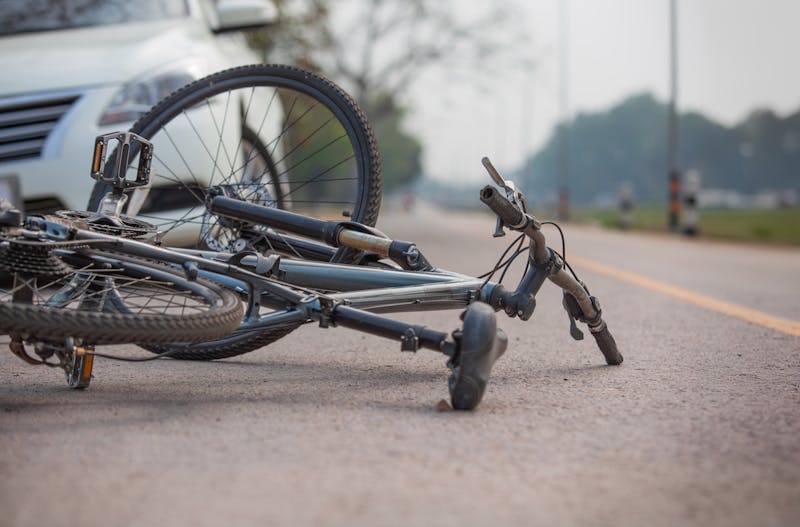
In the span of just a few days in August 2026, the Birmingham metro area lost two bicyclists in separate, unrelated traffic crashes. Both incidents are a sobering reminder of how vulnerable cyclists are on Alabama roads, and how important it is for riders, drivers, and families to understand both bicycle safety rules and their legal rights after a crash.
Case One: Jefferson County Deputy's SUV and a Tractor-Trailer
The first crash happened just before 4 a.m. on August 13, 2026, on Sweeney Hollow Road near Amy Drive Northeast, roughly two miles north of Center Point. According to the Alabama Law Enforcement Agency (ALEA) and the Jefferson County Coroner's Office, 39-year-old Marcus D. Gordon of Birmingham was riding his bicycle when he was struck by an SUV driven by a deputy with the Jefferson County Sheriff's Office. Gordon was then hit by a tractor-trailer driven by a man from Pinson. He was thrown from his bicycle and pronounced dead at the scene, with the coroner's office recording the time of death at 3:59 a.m., just eight minutes after the crash was reported.
ALEA's Highway Patrol Division is leading the investigation, and the Jefferson County Sheriff's Office has referred questions about the crash to that agency. As of this writing, the deputy's name has not been publicly released, and no charges have been announced.
This crash is a legally complicated one. It involves two separate vehicles — a law enforcement patrol SUV and a commercial tractor-trailer — striking the same cyclist in sequence, in the pre-dawn dark, on a road without dedicated bike infrastructure. Untangling which impact caused which injuries, and whether either driver failed to see or yield to the cyclist, will likely require accident reconstruction, dashcam and patrol-vehicle data, and a careful review of ALEA's findings.
Case Two: A Beloved Cyclist Struck in Irondale
Four days later, on the morning of August 17, 2026, a second fatal bicycle crash struck close to home for the region's cycling community. Stuart Elliott Roberts, 65, of Mountain Brook, was riding his bicycle in the 2800 block of Crestwood Boulevard in Irondale at around 5:58 a.m. when he was struck by a vehicle and pronounced dead at the scene. The Irondale Police Department is investigating.
Roberts was known locally as an avid, safety-conscious rider, and his death was mourned by the Birmingham cycling community. Like the Sweeney Hollow Road crash, this incident happened in low-light, early-morning conditions — a recurring factor in cyclist fatalities nationwide, since visibility for both drivers and riders drops sharply before sunrise.
Why Early-Morning Hours Are So Dangerous for Cyclists
Both crashes happened before 6 a.m., a pattern that isn't a coincidence. Federal traffic safety data consistently shows that a disproportionate share of cyclist fatalities occur in low-light conditions, when:
- Headlights and reflective gear are the only real visual cues drivers have
- Fatigued commercial and commuter drivers may have slower reaction times
- Cyclists are harder to see against dark roadway backgrounds, especially on roads without shoulders or bike lanes
- Speed differentials between vehicles and bicycles are magnified on rural or semi-rural roads like Sweeney Hollow Road
For riders, this means front and rear lights, reflective clothing, and reflective wheel or pedal accessories aren't optional extras — they can be the difference between being seen and not.
Alabama's Rules of the Road for Bicyclists
Alabama law treats bicycles as vehicles, which means cyclists have the same rights — and many of the same responsibilities — as drivers. Key rules under the Alabama Code include:
- Ride with traffic: Cyclists must ride on the right side of the road, in the same direction as traffic, as close to the right as is safe.
- Three-foot passing law: Alabama requires drivers to leave at least three feet of clearance when passing a bicyclist, and to move fully into an adjacent lane when possible.
- Lights required at night: A white front light visible from at least 500 feet and a red rear reflector or light are required for riding between sunset and sunrise.
- Obey traffic signals and signs: Cyclists must stop at red lights and stop signs and yield the right-of-way just as motorists must.
- No riding more than two abreast: Groups of cyclists must generally not ride more than two side by side, and must move to single file when being passed.
- Hand signals: Cyclists are expected to signal turns and stops, just as drivers use turn signals and brake lights.
Drivers, in turn, have a legal duty to watch for cyclists, slow down and give room when passing, and never assume a bike lane or shoulder is empty just because it's dark or early. Failing to yield, distracted driving, and unsafe passing are among the most common causes of car-versus-bicycle collisions in Alabama.
Who Can Be Held Liable in a Fatal Bicycle Crash?
Liability in a bicycle fatality case depends heavily on the facts, and both of these Birmingham-area cases illustrate how complicated that analysis can get:
- When a government vehicle is involved. The Sweeney Hollow Road crash involved a Jefferson County Sheriff's Office vehicle. Claims against a county, municipality, or state agency in Alabama are governed by special rules, including strict notice requirements and, in many cases, caps on damages under Alabama's laws governing claims against the state and its subdivisions. These claims typically have much shorter deadlines than an ordinary car accident case, so acting quickly matters enormously.
- When a commercial truck is involved. Tractor-trailer crashes bring in an additional layer of potential liability — not just the driver, but potentially the trucking company, depending on issues like hours-of-service compliance, maintenance records, and training. Commercial vehicle crashes are also more likely to involve insurance policies with far higher limits than a typical personal auto policy, and trucking companies often send their own investigators to the scene within hours, which is one reason families benefit from having their own legal representation early.
- When a single passenger vehicle is involved. In crashes like the Irondale incident, the central legal questions usually involve whether the driver was speeding, distracted, impaired, or simply failed to see the cyclist in time to stop — along with whether road design, lighting, or visibility played a contributing role.
In any of these scenarios, a wrongful death claim can allow surviving family members to pursue compensation for funeral and burial expenses, lost income and financial support, loss of companionship, and — under Alabama's unique wrongful death statute — punitive damages intended to punish the at-fault party's conduct, since Alabama does not permit purely compensatory damages in wrongful death cases.
What to Do After a Bicycle Accident (or the Death of a Loved One)
- Prioritize medical care first. Even minor-seeming injuries after a bike-vehicle collision can indicate serious internal trauma or head injury.
- Preserve evidence quickly. Photos of the scene, the bicycle, damage to any vehicles, and road conditions can disappear fast — especially with government or commercial vehicles involved.
- Get the official crash report. Request the ALEA or local police report as soon as it's available.
- Don't give a recorded statement to an insurance company before speaking with an attorney, particularly if a government entity or trucking company is involved.
- Watch the clock on legal deadlines. Alabama's general personal injury statute of limitations is two years, but claims against government agencies often require formal notice within a matter of months — sometimes far sooner.
- Consult a plaintiff's personal injury or wrongful death attorney who has experience with bicycle accident cases, government liability claims, and commercial trucking litigation. These cases move fast, involve multiple potentially liable parties, and often require accident reconstruction experts to establish exactly what happened.
Moving Forward
The deaths of Marcus Gordon and Stuart Roberts, coming within days of each other on Birmingham-area roads, underscore how much is still needed to protect cyclists: better lighting and shoulders on rural roads, stronger enforcement of the three-foot passing law, and greater driver awareness during the early-morning hours when visibility is lowest.
For families facing the aftermath of a bicycle fatality or serious injury crash, understanding Alabama's rules of the road and the legal options available — including claims against government vehicles, commercial trucking companies, or individual drivers — is an essential first step toward accountability and, ultimately, some measure of justice.
This article is for general informational purposes only and does not constitute legal advice. Every case is different, and anyone affected by a bicycle accident in Alabama should consult a licensed personal injury attorney to discuss the specific facts of their situation.