

A fatal workplace accident can leave a family facing grief, unanswered questions, and sudden financial uncertainty. Families may need to determine whether workers’ compensation benefits are available, whether someone outside the employer contributed to the death, and whether an Alabama wrongful-death claim can be pursued.
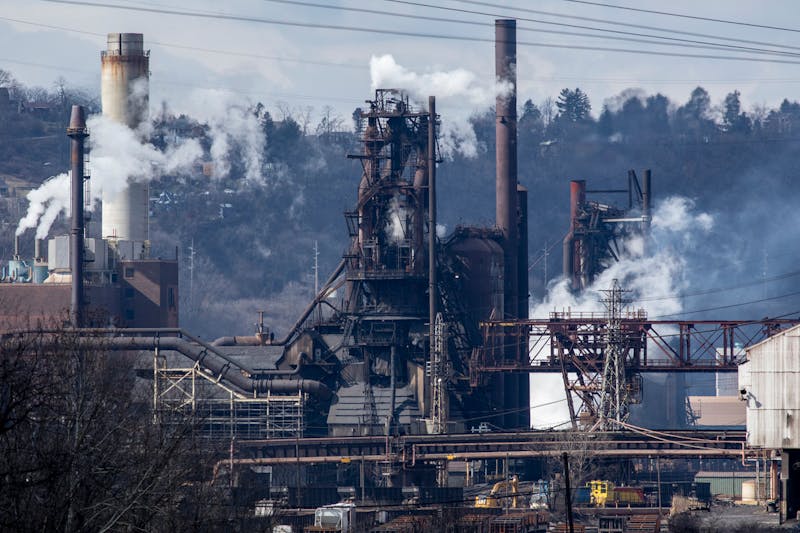
On July 14, 2026, 37-year-old Lederiest Antwon Clark of Bessemer was killed in an apparent industrial accident at Mill Steel Company on Finley Avenue in Birmingham. Authorities reported that Clark suffered blunt-force injuries and was pronounced dead at the scene. The Occupational Safety and Health Administration, or OSHA, opened an investigation, but officials had not publicly explained what caused the accident as of the initial reports.
Because the investigation is ongoing, it would be inappropriate to assume that Mill Steel, an employee, an equipment manufacturer, or any other party caused the accident. Still, this tragedy highlights several important legal principles for Alabama families after a fatal workplace incident.
Alabama Workers’ Compensation Death Benefits
When an employee dies because of an accident arising out of and occurring in the course of employment, eligible dependents may be entitled to benefits under the Alabama Workers’ Compensation Act.
Workers’ compensation is generally a no-fault system. A qualifying family typically does not have to prove that the employer was negligent to obtain covered death benefits. Depending on the circumstances, benefits may include payments to eligible dependents and certain burial expenses.
The identity and number of dependents can affect the benefits available. A surviving spouse and minor children may qualify under Alabama law, while other relatives may need to prove that they depended financially on the deceased worker.
Can the Family File a Lawsuit Against the Employer?
In most cases, workers’ compensation is the exclusive remedy against the worker’s direct employer for a job-related injury or death. That generally prevents the family from filing an ordinary negligence or wrongful-death lawsuit against the employer when the Workers’ Compensation Act applies. Alabama’s exclusivity provision is found in Ala. Code § 25-5-52.
This limitation does not necessarily end the legal investigation. A workplace may involve multiple companies, contractors, equipment suppliers, property owners, maintenance providers, staffing businesses, and transportation companies.
Under Ala. Code § 25-5-11, an injured worker—or the personal representative in a death case—may have a claim against a responsible third party. Potential third parties could include:
- A manufacturer that supplied defective machinery
- An outside contractor that performed unsafe repairs
- A property owner that controlled a dangerous condition
- A maintenance company that failed to service equipment properly
- Another company operating or transporting materials at the facility
Alabama law also recognizes certain limited claims involving a co-employee’s statutorily defined willful conduct. Ordinary carelessness is not enough for that type of claim.
How Alabama Wrongful-Death Damages Work
Alabama’s wrongful-death law is fundamentally different from the laws of most other states.
Under Ala. Code § 6-5-410, a wrongful-death action must generally be filed by the deceased person’s personal representative. Individual relatives do not ordinarily file the case in their own names. The claim may be brought when a wrongful act, omission, or negligence caused the death, and the deceased person could have pursued a claim had the conduct resulted in injury rather than death.
Most importantly, Alabama wrongful-death damages are punitive, not compensatory.
That means the damages are not calculated to reimburse the family for lost wages, medical bills, funeral expenses, grief, loss of companionship, or the economic value of the deceased person’s life. Instead, the purpose is to punish the defendant for wrongful conduct and deter similar conduct in the future.
The amount of a potential award, therefore, focuses primarily on the gravity of the defendant’s wrongdoing and the need for deterrence. This unusual rule makes early investigation especially important because evidence about the responsible party’s conduct may determine whether a wrongful-death claim exists and how serious that conduct was.
Wrongful-death proceeds are also treated differently from ordinary estate assets under Alabama law. Section 6-5-410 provides that recovered damages are not subject to the deceased person’s debts and are distributed according to Alabama’s statute of distributions.
An Alabama wrongful-death action generally must be commenced within two years of death. Families should not wait until the deadline approaches, however. Machinery may be repaired, video may be overwritten, work areas may change, and witnesses’ memories may fade.
What Safety Duty Did the Employer Have?
Federal law generally requires employers to provide a workplace free from recognized hazards likely to cause death or serious physical harm and to follow applicable OSHA standards.
Depending on what occurred, an industrial employer’s duties may include properly guarding machinery, training employees, inspecting equipment, enforcing safety procedures, controlling hazardous energy, and using lockout/tagout procedures during qualifying service or maintenance work.
OSHA’s lockout/tagout standard requires covered employers to establish procedures that prevent the unexpected energization, startup, or release of stored energy while employees service or maintain machinery. OSHA also has standards addressing machine-guarding hazards during normal production.
Whether any particular duty was violated in this Birmingham accident remains unknown. Investigators may review training records, maintenance documents, safety policies, surveillance video, equipment condition, prior incidents, witness statements, and the work being performed at the time.
Protecting the Family’s Legal Rights
After a fatal industrial accident, a prompt legal investigation can help determine whether the family is limited to workers’ compensation benefits or also has a claim against a responsible third party.
HGD Law Firm helps Alabama families preserve evidence, evaluate workers’ compensation benefits, identify potentially responsible companies, and investigate whether a wrongful-death claim should be pursued. Our attorneys approach these matters with respect, care, and a commitment to obtaining the best possible outcome for every client.
This article is for general informational purposes and does not constitute legal advice. Every case depends on its specific facts. Prior results do not guarantee a similar outcome.