Most people who call a personal injury firm never see everyone who works on their case. They speak with someone at intake, then a paralegal, then an attorney, and maybe a case manager who knows the file better than they do. What they experience, whether they realize it or not, is a team. And a team is only as strong as the trust between the people on it.
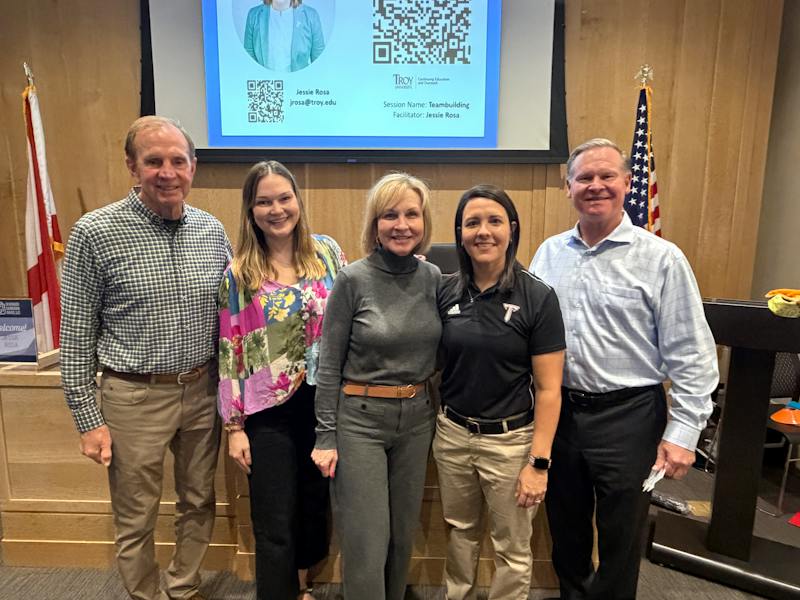
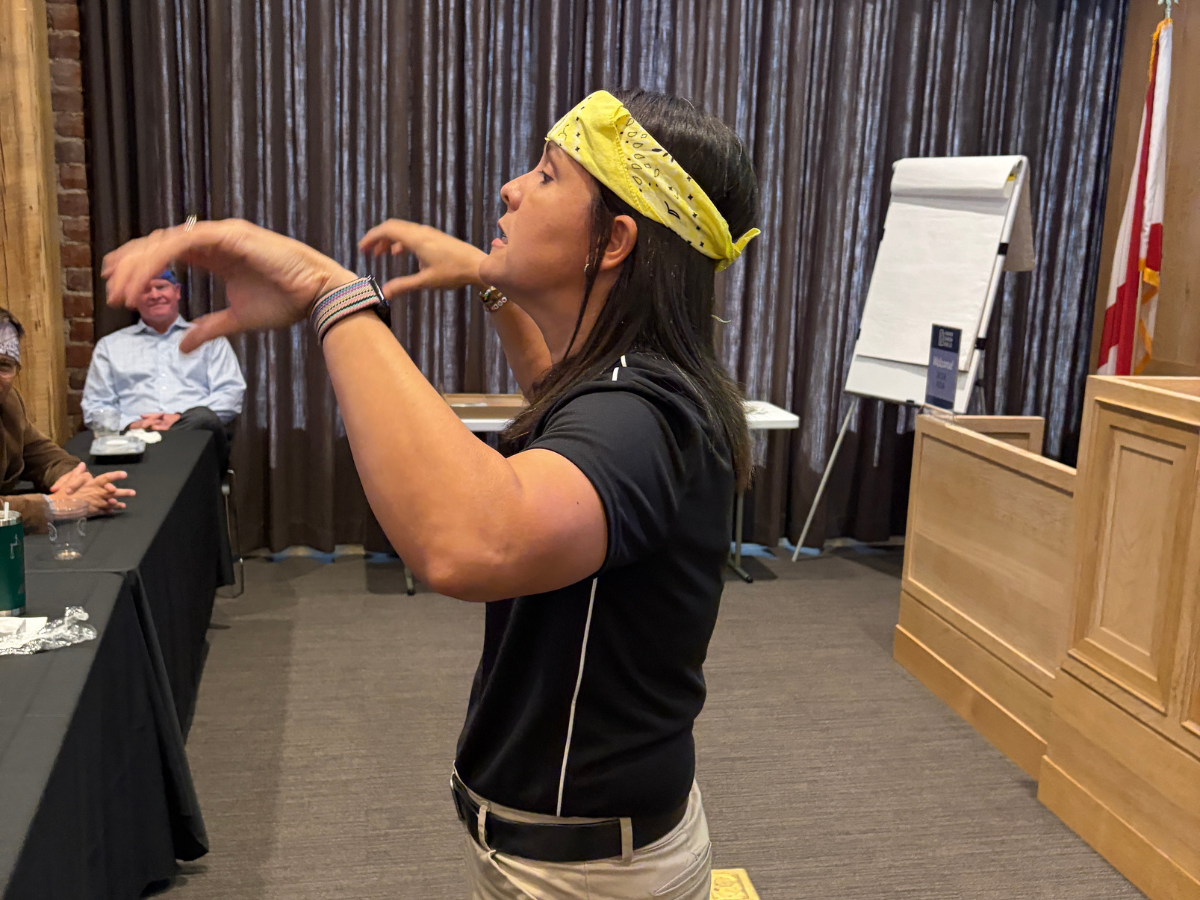
That is why HGD recently set aside time, away from deadlines, depositions and discovery, to work on ourselves. We welcomed back professional development trainer Jessie Rosa to lead our attorneys and support staff through a session built around three ideas: connection, trust and commitment.
Who is Jessie Rosa?
Jessie Rosa is a Professional Development Trainer with Troy University’s Continuing Education and Outreach. Before she began training teams, she spent fifteen years in college athletics administration, most recently as Senior Director of Athletics at Auburn University at Montgomery. There, she helped guide the department through its move to NCAA Division II and kept operations running through the COVID-19 pandemic. Someone who has held a team together under that kind of pressure has earned the right to talk about teamwork.
This was not Jessie’s first visit to HGD. She has led our team building before, and inviting her back was an easy decision. She knows our people, she knows how we work, and she does not let anyone hide in the back of the room.
What makes a team strong?
Jessie framed the day around three things every strong team needs:
-
Connection. Knowing the people you work with as people, not just as job titles or email signatures.
-
Trust. Believing your teammates will do what they say, and knowing you can ask for help, raise a concern or admit a mistake without fallout.
-
Commitment. Choosing, out loud, to show up for one another, especially when the work gets hard.
None of this is a soft extra. When Google studied what set its most effective teams apart, in research known as Project Aristotle, the top factor was not talent or seniority. It was psychological safety, the shared sense that it is safe to take a risk or be vulnerable in front of your teammates. Close behind came dependability, clarity, meaning and impact. As Google’s re:Work guide on team effectiveness puts it, how a team works together matters more than who is on it.
Why put on a blindfold at work?
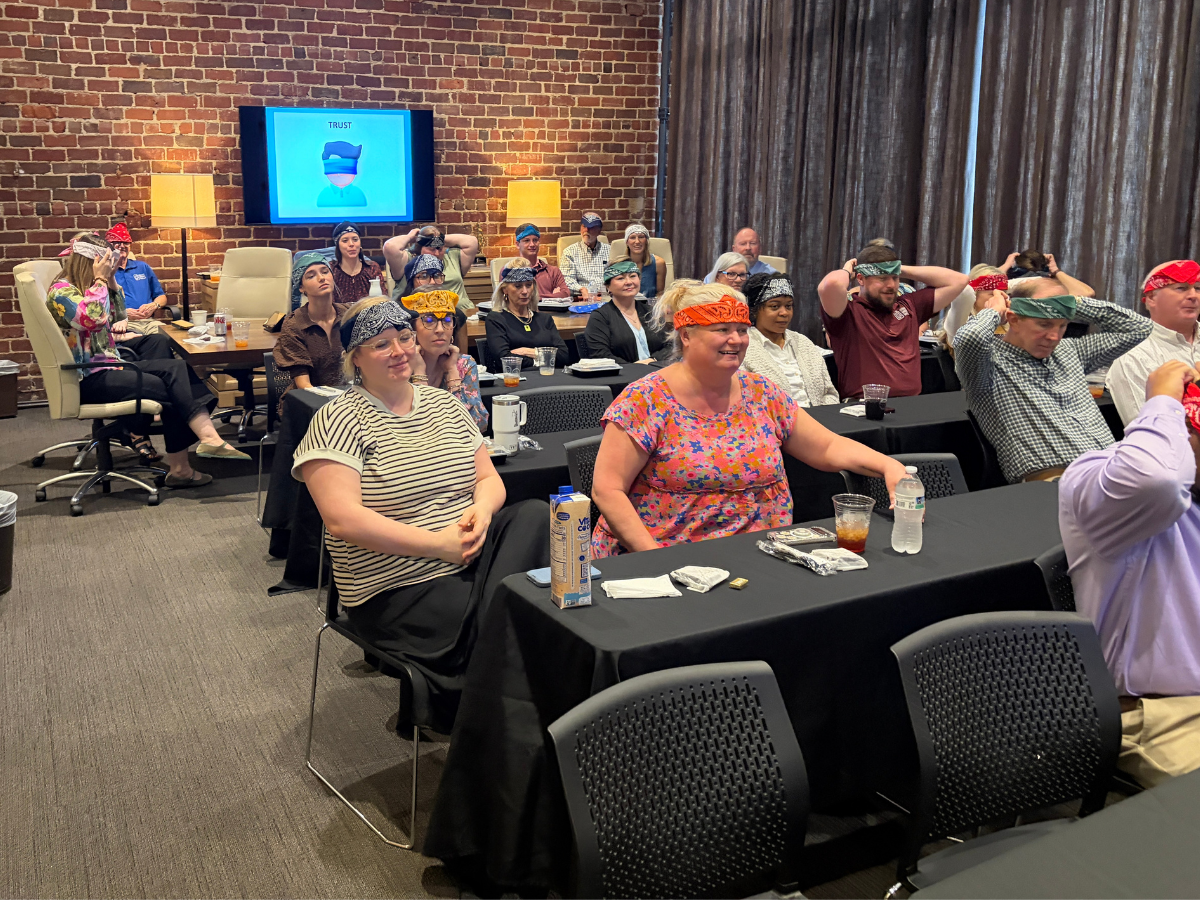
The trust portion of the day included a blindfolded exercise. One teammate gave up their sight and relied entirely on a partner’s voice to find their way. It sounds simple until you are the one in the blindfold. Every instruction suddenly matters. Clear communication matters. Patience matters. And the person guiding you has to earn your trust one step at a time.
The lesson maps directly onto our work. Clients often come to us at a moment when they cannot see the road ahead, after a crash, an injury or a loss that has turned life upside down. They are trusting us to guide them through a process that is unfamiliar and, for many, intimidating. Practicing what it feels like to be on both sides of that trust makes us better at honoring it.
What went into the HGD team puzzle?
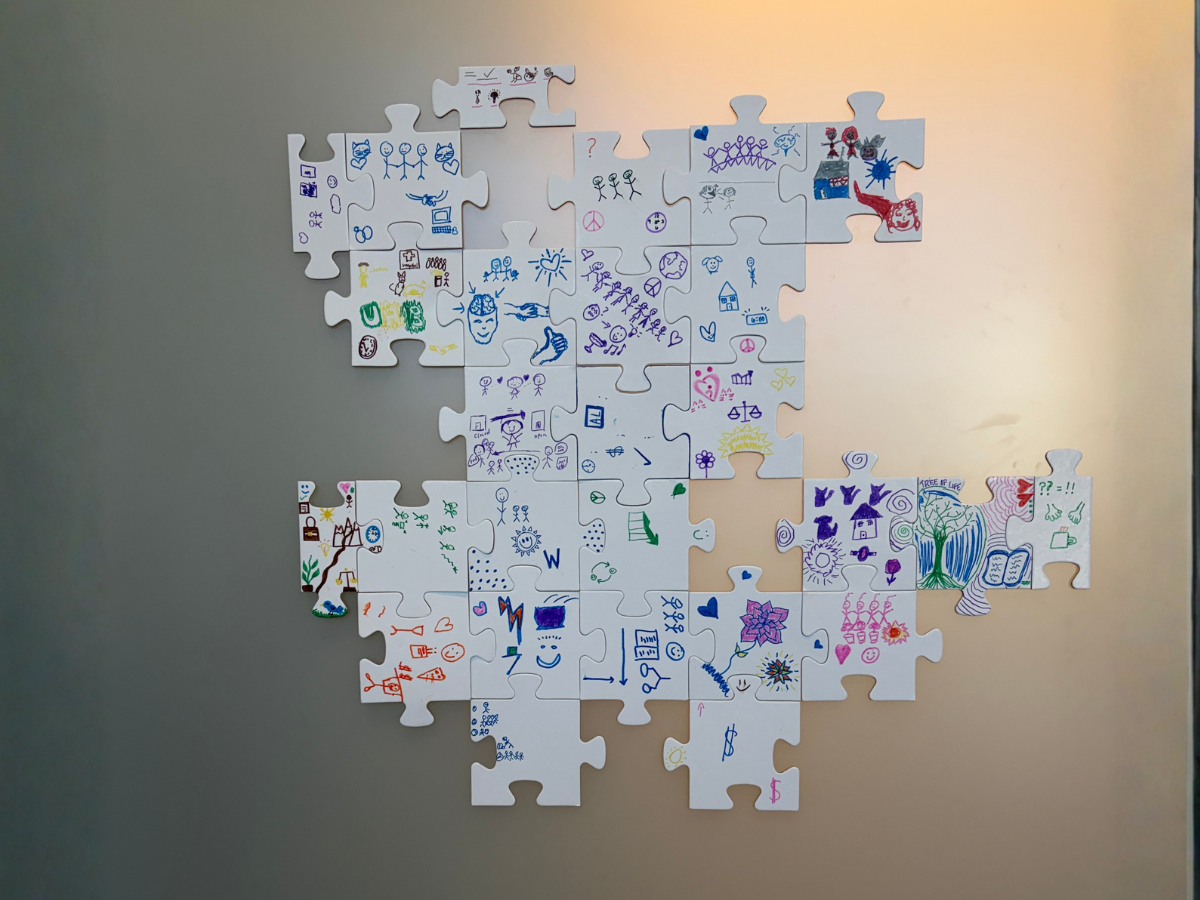
The centerpiece of the day was a giant team puzzle. Each person received a blank piece and filled it with two things:
-
Photos of why we show up for work: The people, places and purposes that get each of us out the door in the morning.
-
Two commitments we make to the team: Specific promises about how we will show up for one another.
The photos told stories that rarely come up in a staff meeting. The commitments were just as personal, and some of them were practical enough to put to work the very next morning.
When the pieces came together, the finished puzzle showed something an org chart never could. Every piece was a different shape, every piece carried a different story, and the picture was not complete until every one of them was in place. The team puzzle is now displayed in the Moot Court Room as a reminder to our team that we are all an important piece of the puzzle.
Why does team building matter to HGD?
HGD is built around 14 attorneys and a 30-person support team, and our vision is simple: build our team strong so we can be the best for our clients, for each other and for our community.
-
For our clients. A case passes through many hands. When those hands trust each other, details do not get dropped, questions get answered faster, and clients feel known rather than processed.
-
For each other. This work involves long days and hard stories. Knowing the person down the hall has your back is what keeps a good team together for the long haul.
-
For our community. Birmingham is home. The same people who show up for each other at work are the ones who show up for neighbors, causes and the communities our clients live in.
Bringing Jessie back is not a one-time event on a calendar. It is part of an ongoing commitment to invest in the people who do this work, because the quality of our team shows up in every case we handle.
What does this mean if you are an HGD client?
It means the people working on your case know each other, rely on each other and have made specific promises to one another about how they will do their jobs. When you call with a question, the person who answers knows who to walk it to. When your case changes hands, it changes hands between people who trust each other.
Our thanks to Jessie Rosa for another thoughtful, challenging and memorable day.
If you or someone you love has been injured and you have questions about what comes next, we would be glad to talk. Reach out to HGD for a free consultation, and you will meet the team for yourself.